The STEADY™ Program
Structure, frequency, and evidence base for referring providers.
Program Structure
- Duration: 8 weeks
- Frequency: Two 45-minute one-on-one sessions per week (16 sessions total)
- Setting: Private, quiet studio; supplemented by one in-home safety visit
- Homework: Structured home program assigned after every session
- Re-assessment: Periodic reassessments using standardized measures throughout the program and at the end of the initial 8 weeks
- Risk-factor review: During the 8-week program, the coach also reviews other factors that may contribute to fall risk, including medications and supplements, vision, home safety, hearing, footwear, and other relevant lifestyle or environmental factors
Training Domains
- Strength: functional lower-extremity strength emphasizing sit-to-stand mechanics, hip abductor strength, and posterior chain
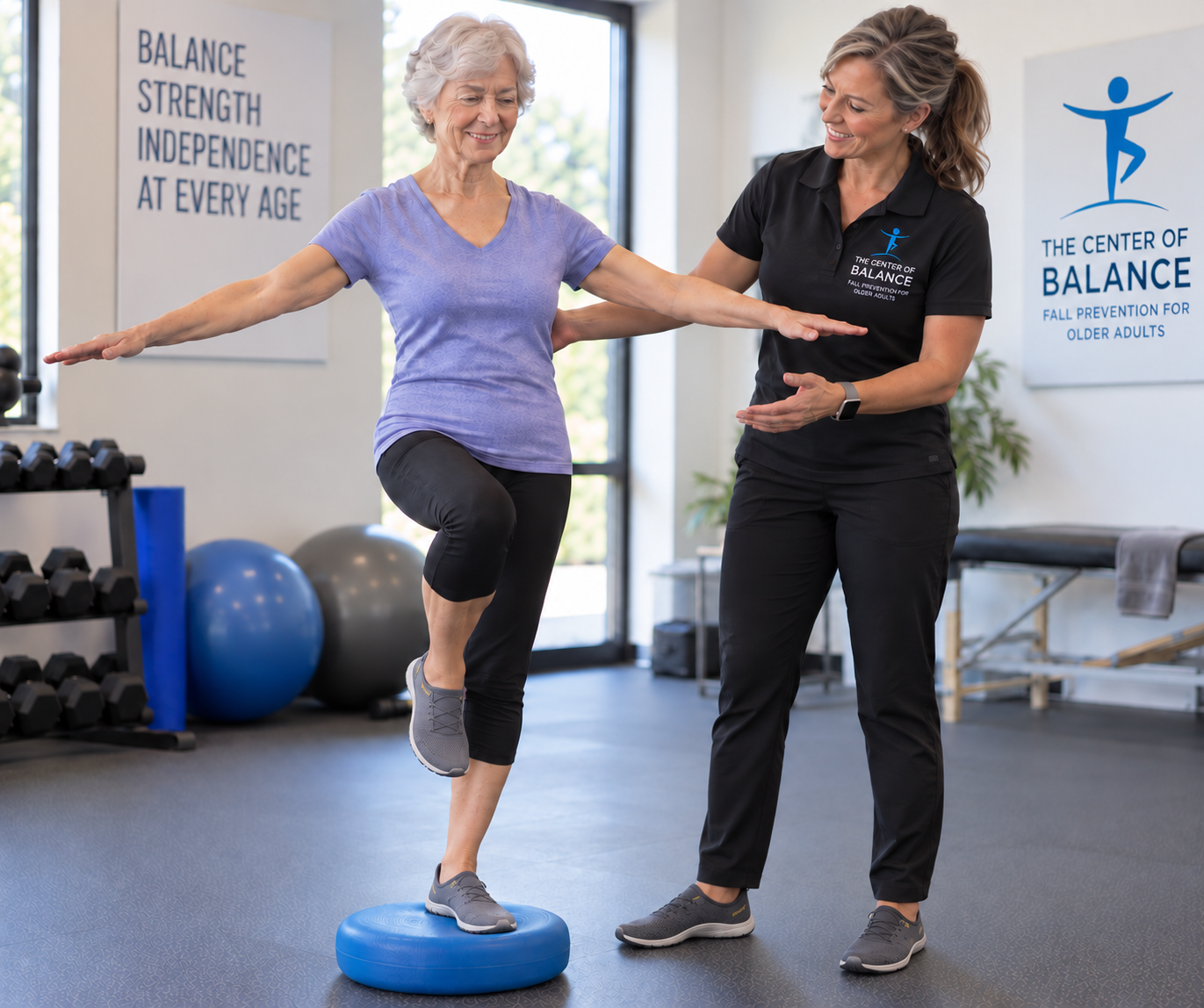
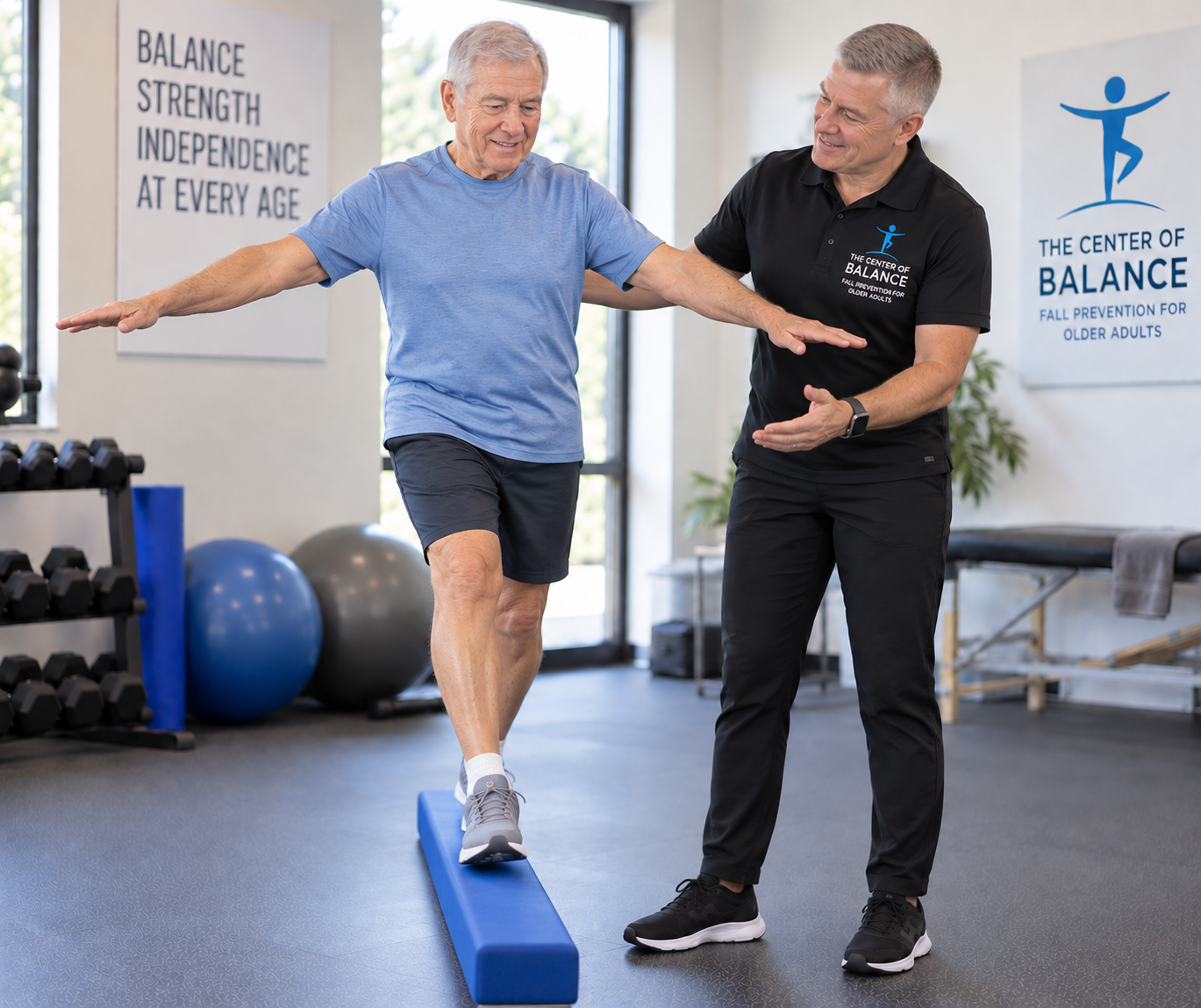
- Balance: static and dynamic, progressing to compliant surfaces, eyes closed, and head-turn variations
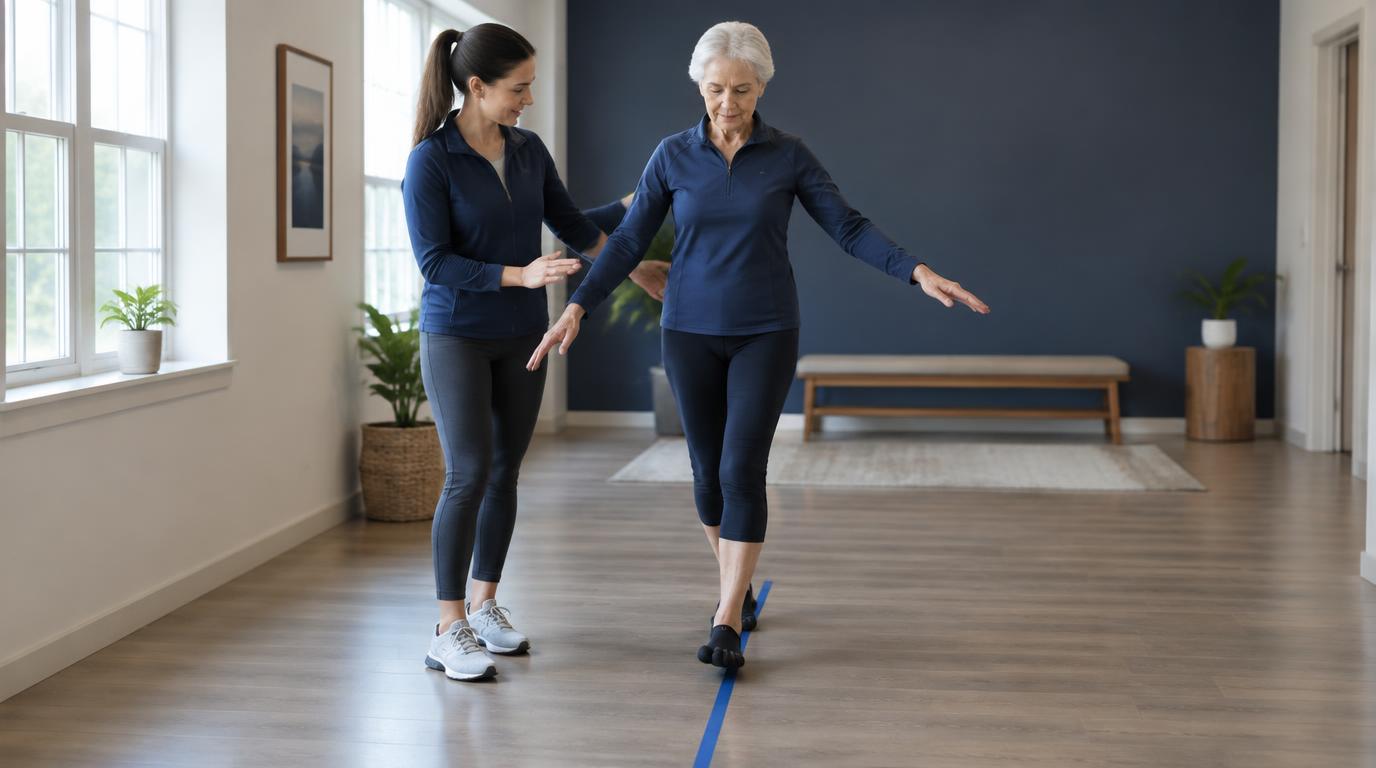
- Gait: cadence, step length, and turning under load and dual-task
- Dual-task: concurrent cognitive challenge to train executive-function integration with motor control
- Proprioception: barefoot and uneven-surface work as tolerated
- Environmental & lifestyle: medications and supplements, vision, home safety, hearing, footwear, hydration, and sleep
Evidence Base — Selected
- Single-leg training has been associated with substantial reductions in fall risk in adults 75+.
- Dual-task balance training outperforms single-modality balance training for gait and fall outcomes.
- The ability to complete a 10-second single-leg stand is inversely correlated with all-cause mortality risk (British Journal of Sports Medicine).
- Sit-to-stand ability is a strong independent predictor of longevity (European Journal of Preventive Cardiology).
- Environmental modification of the home reduces fall incidence in older adults (Cochrane review–consistent findings).
Not Physical Therapy
STEADY™ is a preventive, comprehensive program — not episodic PT. There is overlap in some techniques, but the intent, duration, and scope are different. STEADY™ is well suited to patients who have completed PT and need continued, structured progression, and to patients who have not been injured but are at rising fall risk.
Ongoing Balance Skills Training — after STEADY™
There is no graduation. Continued training is needed because the aging process does not stop: strength, reaction time, proprioception, and vision keep changing year over year, and the gains made during the STEADY™ arc require ongoing reinforcement to hold. Ongoing training is specifically designed to offset the continuing natural decline in balance associated with aging. Patients therefore continue into structured Ongoing Balance Skills Training — typically 1–2 sessions per week — to preserve gains, progress the challenge as the patient changes, and catch new risk factors early.